A .300 hitter gets a hit three times out of ten. Seven times out of ten, they walk back to the dugout. If you didn't know baseball, that would sound like failing. If you know baseball, that's a great season.
Conversion rates work the same way. A number that looks terrible next to the wrong benchmark can be a strong season for your business. So when someone asks what is a good website conversion rate, my honest first answer is that it depends on what game you're playing. After 12+ years and 100+ sites, I've watched more founders panic over the wrong comparison than over a real problem.
The Short Answer
A good website conversion rate depends on what counts as a conversion and what kind of business you run. Unbounce's 2024 landing page benchmarks put the median around 6.6%, but a service business site usually runs lower because the decision is bigger. The best benchmark is your own baseline over the last few months.
If You're Reading This Because It's Your Site
Reading more isn't the hard part. La Jugada is $47 and it tells you which layer this is actually sitting in.
Get it, $47What Counts as a Conversion?
Before any number means anything, you have to decide what you're counting. A conversion is the action that moves someone toward hiring you or buying from you.
For a service business, that's usually one of these:
- An inquiry through your contact form
- A booked call through your scheduling link
- A purchase of a smaller offer or product
- A sign-up for your email list, if the list is how you sell
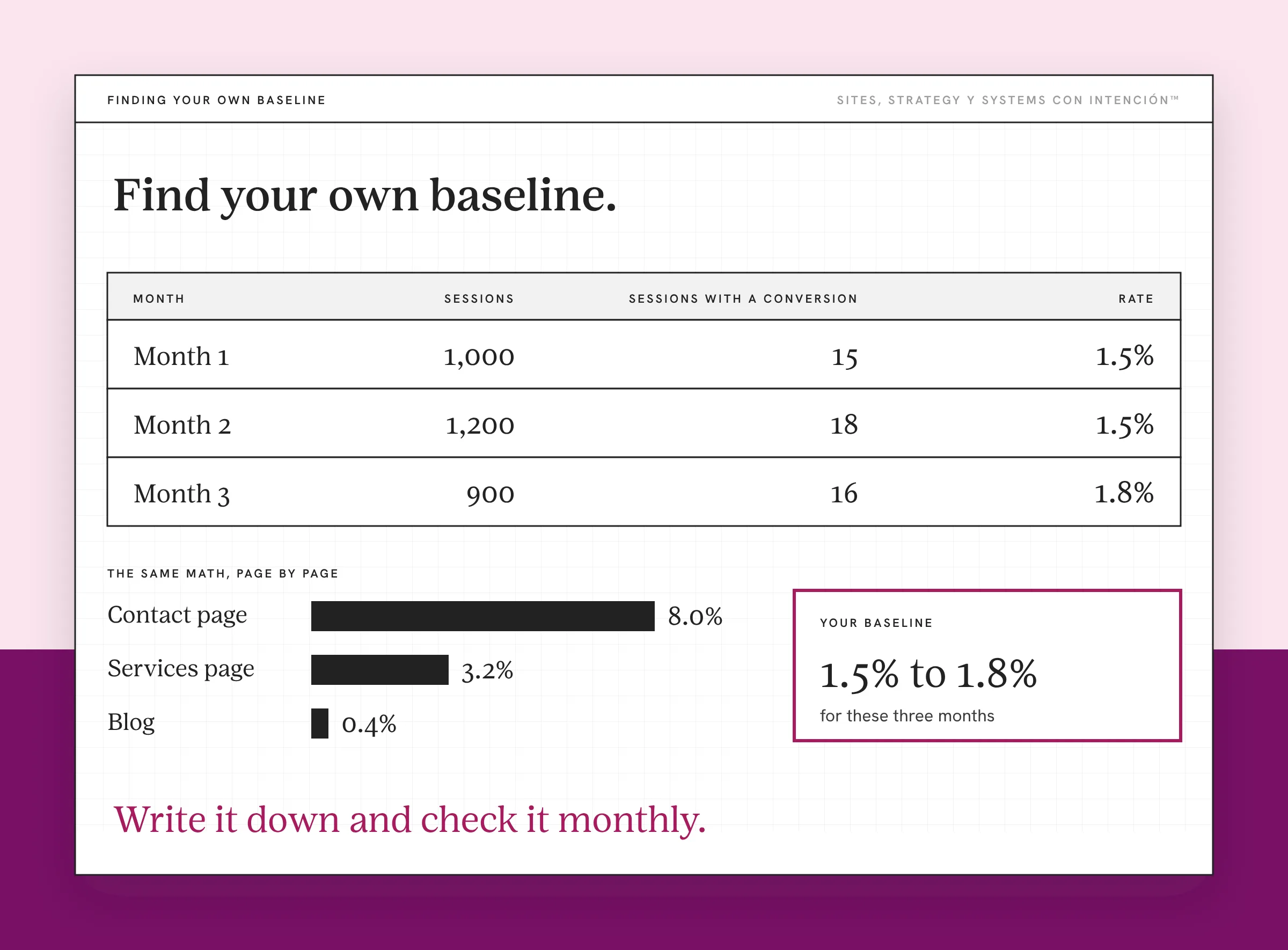
Pick the one that's closest to revenue and call that your main conversion, which GA4 calls a key event. Then your conversion rate is simple: sessions with a conversion divided by total sessions, times 100. If there were 1,000 sessions this month and 15 included an inquiry, that's 1.5%.
The setup for counting it in Google Analytics 4 is in what to track in GA4 for a service business. How to tell if your website is actually converting walks through checking that count against your inbox.
What Do Website Conversion Rate Benchmarks Actually Measure?
The number you'll see most often comes from landing page studies. Unbounce's 2024 Conversion Benchmark Report puts the median conversion rate across all industries at 6.6%, based on more than 41,000 landing pages. Across the industries it covers, medians range from 3.8% to 12.3%.
Those are real numbers. They're also measuring something specific. A landing page is usually one page with one offer, built for one campaign, often getting traffic that was already interested enough to click an ad. Your whole website is a different animal. It gets blog readers, people looking for your address, people checking you out after a referral and people who'll come back three times before they decide.
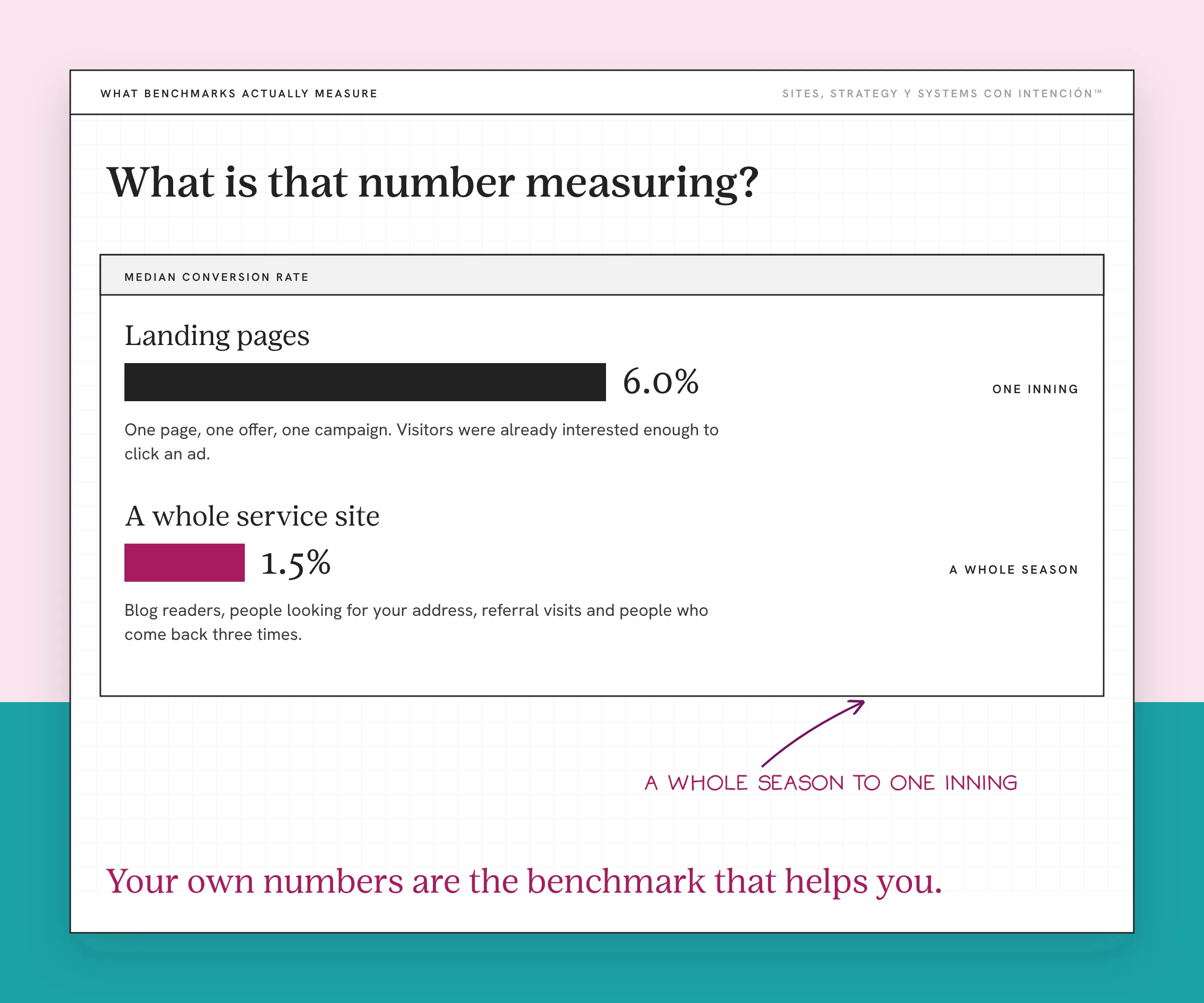
So a site-wide conversion rate for a service business will usually sit below a landing page benchmark. You're comparing a whole season to one inning, pues.
Why Do Service Business Sites Convert Lower?
The decision is bigger. Someone can buy a $20 product on impulse. Hiring someone for a few thousand dollars takes trust, research and usually more than one visit.

A few other things pull the number down without meaning anything's wrong:
- Blog traffic. Readers who came for an answer and left with it count as visitors who didn't convert.
- Returning visitors. Someone who visits four times before booking counts once on the yes side and three times on the no side.
- High-ticket offers. The more something costs, the fewer people say yes. You also need fewer yeses to make it work.
I had a client panic over their conversion rate because they'd compared it to ecommerce stats. Bendito, the number they were comparing against came from stores selling products people buy in one click. Their business sells a service people think about for weeks. Different game, different average.
What matters more than the rate is who's converting. A smaller number of well-aligned inquiries outperforms a higher volume of misaligned ones, on both close rate and how fast they close. More traffic is not the goal makes the same case from the traffic side. Quality of inquiry is the number I trust most in website strategy.
How Do You Find Your Own Baseline?
Your own numbers are the benchmark that actually helps you. Setting one takes about ten minutes:
- Pick your main conversion. The one closest to revenue.
- Pull the last three months. Visitors and conversions for each month.
- Calculate each month's rate. Sessions with a conversion divided by total sessions, times 100.
- Look at the main pages separately. GA4's Pages and screens report shows key events for each page. Your services page and contact page should convert higher than your blog.
- Write it down and check it monthly. Compare each month with your own last three, then with the same month last year if you have it.
Once you have a baseline, you'll know whether a dip is a real change or a normal month. Créeme, that alone takes a lot of the stress out of opening your analytics. The website metrics that matter shows what else belongs in that monthly look.
What If Your Conversion Rate Really Is Low?
If your rate is dropping against your own baseline or it's low even on your services page, ahí sí, it's time to look closer.
Start with whether it's the people or the pages. What to check first when traffic isn't converting walks through that fork. Then look at the small conversion frictions that add up, the missing step in your conversion funnel and how UX shapes a high-converting website. If you're not sure the site even has a clear job, a look at the purpose of a website is a good gut check. And if you want to know whether the site is earning what it costs, a website ROI check puts a number on it.
When a site looks finished and the rate still won't move, why a great-looking site isn't generating leads covers the bigger picture.
A good website conversion rate is the one that's steady or climbing for your business and bringing in people you want to work with. Find your baseline this month, then judge every change against it.
Key Takeaways
- What is a good website conversion rate depends on what you count as a conversion and what kind of business you run.
- Unbounce's 2024 landing page benchmarks put the median around 6.6%, but they measure single-offer pages, not whole service business sites.
- Service business sites usually convert lower because the decision is bigger and blog readers count as visitors.
- Your own three-month baseline is a more useful benchmark than any industry average.
- Who converts matters more than the rate, because a few well-aligned inquiries beat a lot of the wrong ones.
I've got my conversion rate. So what do I fix first?
Answer five questions and share your link. In about 10 minutes you get a personalized read on your site, your marketing and your backend, plus the first move worth making. It's $47 and the results land on a private page with no call.
Want more like this in your inbox? Off the Clock is my week-ish newsletter about websites, systems and burnout-free business.
Frequently Asked Questions
What is a good conversion rate for a website?
It depends on what you count and what you sell. Unbounce's 2024 landing page study puts the median around 6.6% across industries, but whole websites for service businesses usually convert lower because people take longer to decide. A good rate is one that's steady or improving against your own baseline and brings in the right clients.
What is the average website conversion rate?
Unbounce's 2024 benchmark report puts the median landing page conversion rate at 6.6% across industries, with industry medians from 3.8% to 12.3%. Those figures come from single landing pages. A site-wide rate that includes blog readers and returning visitors will usually be lower, so compare your site against its own history first.
Why is my conversion rate lower than the benchmarks?
Most benchmarks measure landing pages or ecommerce stores, where people decide quickly. Service sites have bigger decisions, more research visits and blog traffic that doesn't plan to buy. If your services page and contact page convert well and the right people reach out, a lower site-wide rate is usually fine.
How do I calculate my website conversion rate?
Divide the number of sessions that included a conversion by the total sessions in the same period and multiply by 100. Use your main conversion, like inquiries or booked calls. If there were 1,000 sessions and 15 included an inquiry, your conversion rate is 1.5%. Track it monthly so you can compare against your own baseline.
Should I track conversion rate for each page?
Yes, because a site-wide rate hides a lot. Your services page and contact page should convert higher than your blog posts. Checking the pages that matter most shows you where people decide and where they drop off, which a single average can't do.
About the Author