You've seen a movie because of the trailer and realized halfway through that every good scene was already in those two minutes. The trailer did its job. The movie didn't. You walk out feeling a little tricked, even though nobody technically lied.
That's the movie trailer problem. On your site, it lives in the post click experience. Your ad, post or button makes a promise, someone clicks and the page they land on doesn't keep it. Or they say yes, fill out the form and then nothing happens. In 12+ years and 100+ sites, I've seen more conversions lost in those two moments than anywhere else on a page.
The Short Answer
The post click experience is everything someone finds after they click: the page they land on and what happens after they take action. It breaks when the page doesn't match what they clicked or when nothing confirms their form or booking. Match the promise and close the loop after they say yes.
If You're Reading This Because It's Your Site
Reading more isn't the hard part. La Jugada is $47 and it tells you which layer this is actually sitting in.
Get it, $47What Is the Post Click Experience?
It's the part of your marketing that happens on your site. You've already done the hard work of getting someone to click. The post click experience decides whether that click turns into a conversation.
There are two ends to it:
- The landing moment. The first few seconds after the click, when someone checks whether this page is what they came for.
- The after-yes moment. What happens right after they submit a form, book a call or buy something.
Most advice only covers the first one. For a service business, the second one matters just as much, because that's where a lead decides whether you're as organized as your ad made you look.
Why Does the Page Have to Match What They Clicked?
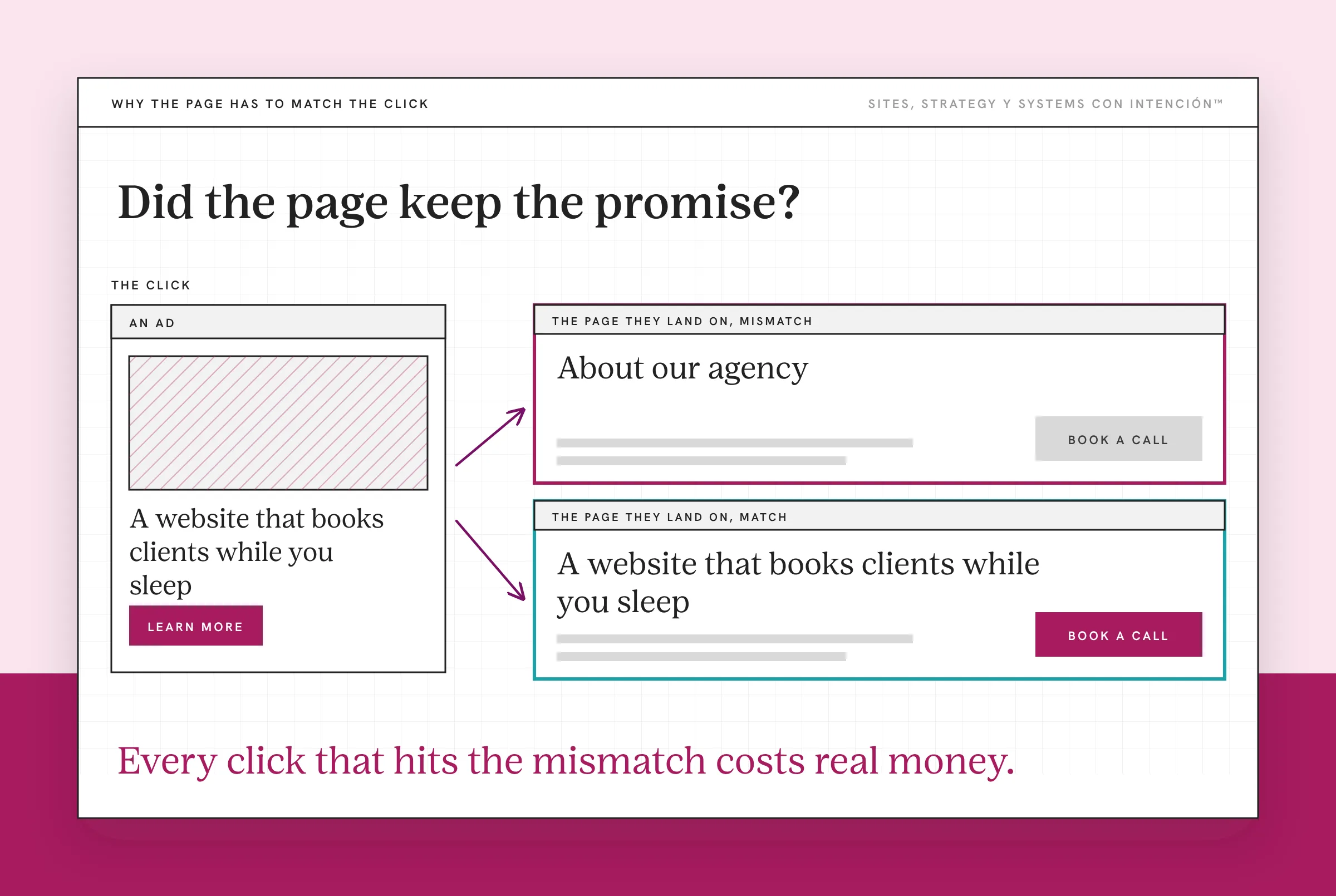
The click was a promise. If your ad says "a website that books clients while you sleep" and the page opens on a general "about our agency" intro, the person has to work to find what they came for. Most won't.
Google's own definition of landing page experience for ads comes down to how relevant and useful your page is to people who click. Relevance is the whole game.
I saw this on a client's paid ads. The ad sent people to the page for the right offer, but the page wasn't set up to do what the ad promised. Ay, qué dolor, because that's paid traffic. Every click that hit the mismatch cost real money.
It doesn't have to be an ad, either. When your content attracts someone with one expectation and the site tells a different story, each channel can look fine on its own and still create friction. That handoff is what content bringing them in and the site closing the sale is all about.
How Do You Make the Landing Moment Match the Click?
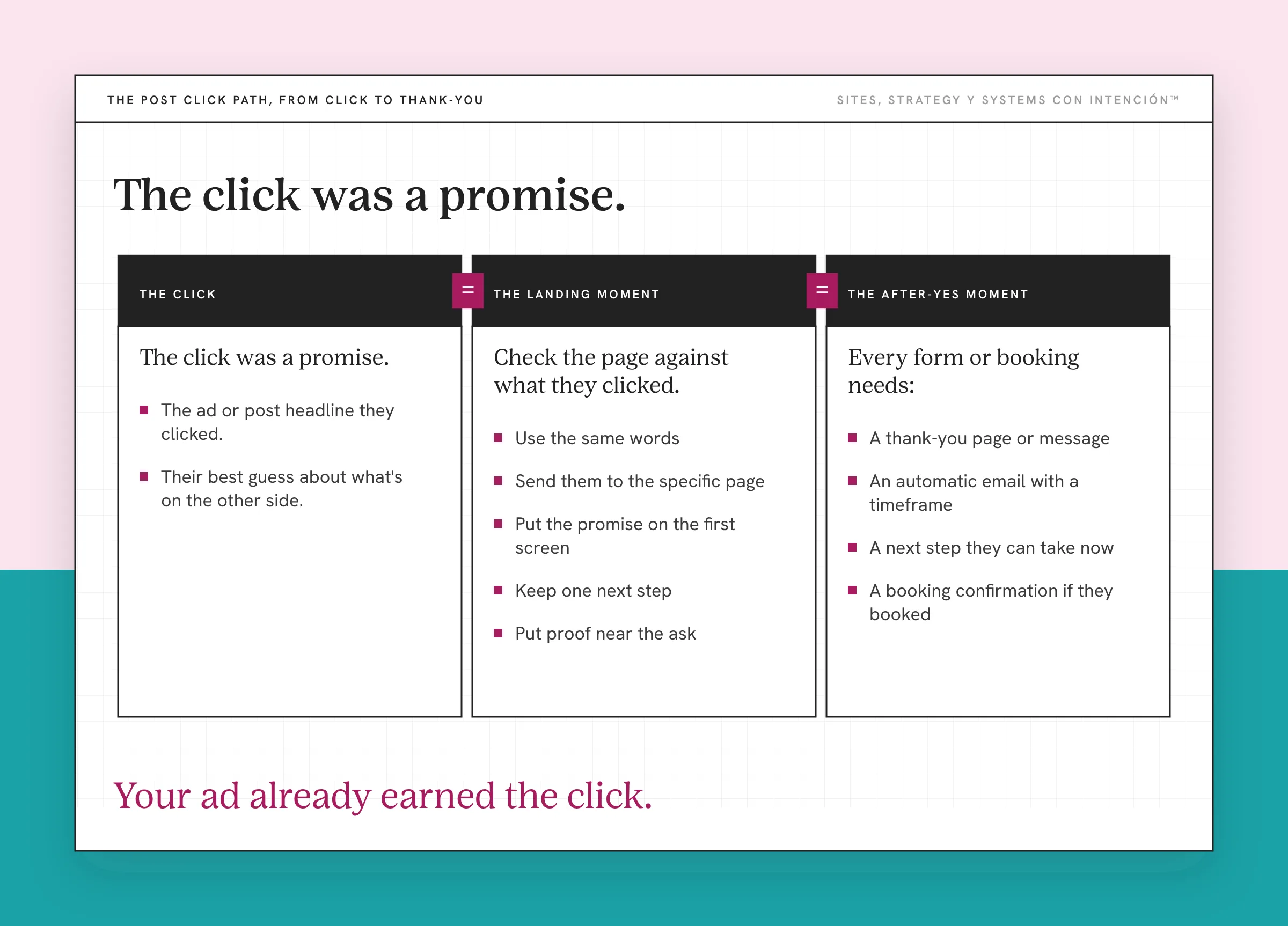
Before you send traffic anywhere, check the page against the thing they'll click:
- Use the same words. The ad or post headline and the page headline should sound like the same conversation. The headline they clicked gave them what Nielsen Norman Group calls information scent, their best guess about what's on the other side. A page that doesn't match it wastes that scent and visitors may leave.
- Send them to the specific page. If the ad is about one offer, send people to that offer's page, never your homepage.
- Put the promise on the first screen. Whatever they clicked for should be visible without scrolling.
- Keep one next step. One clear action that fits what they came for. Why people don't click a call to action covers what stops that click.
- Put proof near the ask. The trust signals that hold up belong right next to the button.
- Test it on a phone. A lot of people will click from one.
If people still land and leave right away, check your bounce rate page by page. A landing page that loses people much faster than the rest of your site is often breaking its promise. Check who it's reaching too, because the wrong audience leaves fast as well. Keeping the promise of the click is a small piece of website strategy with a big effect.
What Should Happen After Someone Says Yes?
This is the part almost everyone forgets. Someone fills out your form, hits submit and then sees the same form again with no message. Or a tiny "thanks" that disappears. They don't know if it worked or what happens next, y ahí se quedan, waiting. That's a gap in what Nielsen Norman Group calls visibility of system status.
A client of mine had exactly this. People were submitting the form and getting nothing back. We added an auto-reply email. That auto-reply made it seem like the process was beginning. Wepa, that's the feeling you want right after someone says yes.
At minimum, every form or booking on your site should have:
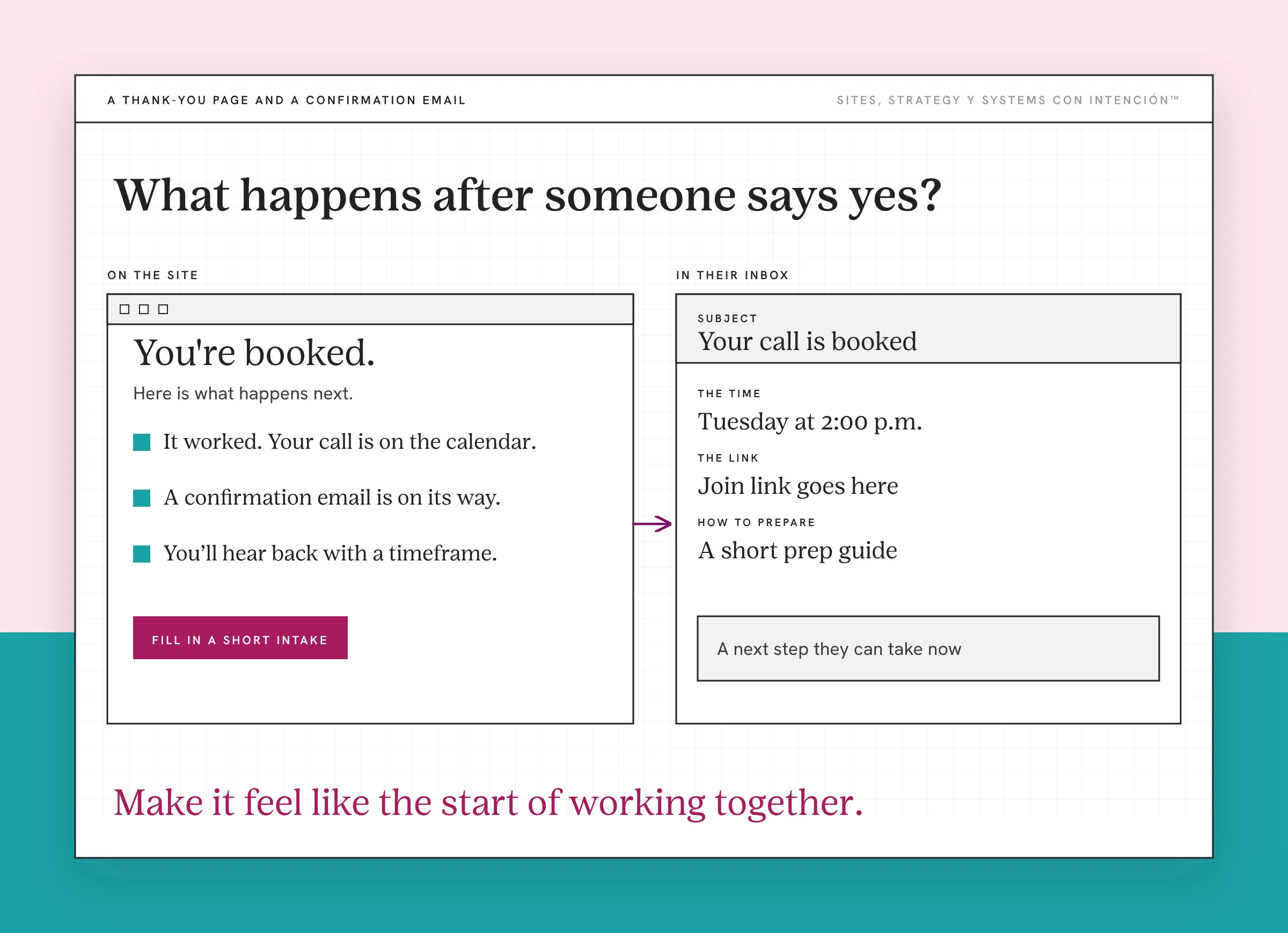
- A thank-you page or message that says it worked and what happens next.
- An automatic email that confirms it and gives a timeframe for your reply.
- A next step they can take now, like a short intake form, a prep guide or a link to a relevant post.
- A booking confirmation with the time, the link and how to prepare, if they booked a call.
None of this needs expensive software. Most form and booking tools can do it out of the box. Mija, once it's set up, it runs on its own, which is what a website that's your best salesperson should do.
How Do You Find Where Your Post Click Experience Breaks?
Walk the path yourself. Click your own ad or post on your phone, read the page like a stranger and fill out the form. Then check your email and book the call. Write down every moment you'd hesitate if you didn't already know the business.
Then look at the numbers. If clicks are healthy and inquiries aren't, the landing moment is likely the problem. If inquiries come in and people go quiet before the call, look at the after-yes moment. When traffic is up and nothing converts at all, the first checks for traffic that isn't converting will help you sort it out.
Post-click problems are usually part of a bigger pattern. The conversion friction audit covers the rest of the site, the conversion funnel step nobody built covers the gaps between pages and a site that looks great and isn't generating leads covers the bigger picture. And before you spend more on ads, remember why no amount of marketing fixes a bad website.
Your ad already earned the click. Make the page keep the promise and make the moment after yes feel like the start of working together.
Key Takeaways
- The post click experience is what happens after the click: the page people land on and what follows when they take action.
- Pages should match the ad or post that sent people there in words, offer and next step.
- Send each ad or post to the specific page it's about and put the promise on the first screen.
- Every form and booking needs a thank-you message, an automatic email and a clear next step.
- Walk the whole path yourself on a phone to find where it breaks.
I'd rather talk through where people drop off after they click.
Bring your site, the ad or post they clicked and whatever's bugging you. One private session on your real question starts at $350 with notes included.
Frequently Asked Questions
What does post click experience mean?
It's everything someone finds after they click an ad, post, email or button. That covers the page they land on and what happens after they act, like a thank-you page or a confirmation email. A strong one keeps the promise of the click and tells people what happens next.
Why do people click my ad and not convert?
The most common reason is that the page doesn't match the ad. If the ad promises one thing and the page leads with something else, people leave. Slow pages, too many choices and no clear next step are the other usual causes. Send the ad to the specific page it's about and repeat its promise on the first screen.
What should happen after someone submits a form on my website?
They should see a message or thank-you page that says it worked and what happens next. An automatic email should confirm it with a timeframe for your reply. Give them one useful next step, like a short intake form or a prep guide, so they know the process has started.
What is the difference between a landing page and the post click experience?
A landing page is one page. The post click experience is the whole sequence after the click, including the landing page, the form, the confirmation and the first email. Your landing page can look great and the experience can still fall apart if nothing happens after someone submits.
How do I test my post click experience?
Go through it the way a new client would. Click your own ad or post on your phone, read the page like a stranger, fill out your form and check the confirmation email. Note every place you'd hesitate. Then compare your click numbers with your inquiries to see which end needs work.
About the Author