
I built an automation at midnight once and she still runs. That automation has never taken a vacation or forgotten a follow-up.
That's what it looks like when your website is your best salesperson. In 12+ years and 100+ sites worked on, the backend gap I see most is manual intake, scheduling and onboarding. It costs owners hours every week and makes it harder for new clients to get started. This post covers what your site can take off your plate while you're off the clock and where to start.
The Short Answer
Your website is your best salesperson when it does the selling you'd otherwise do by hand. It answers the questions you repeat, tells the wrong fits who it isn't for, books calls, follows up and sells your smaller offers on its own. When it can't, you become the salesperson for every lead and the business stops when you do.
If You're Reading This Because It's Your Site
Reading more isn't the hard part. La Jugada is $47 and it tells you which layer this is actually sitting in.
Get it, $47What Does It Mean for Your Website to Be Your Best Salesperson?
A good salesperson knows the offer, answers questions honestly, tells someone when they're not a fit and makes the next step easy. They show up every day, even when you can't.
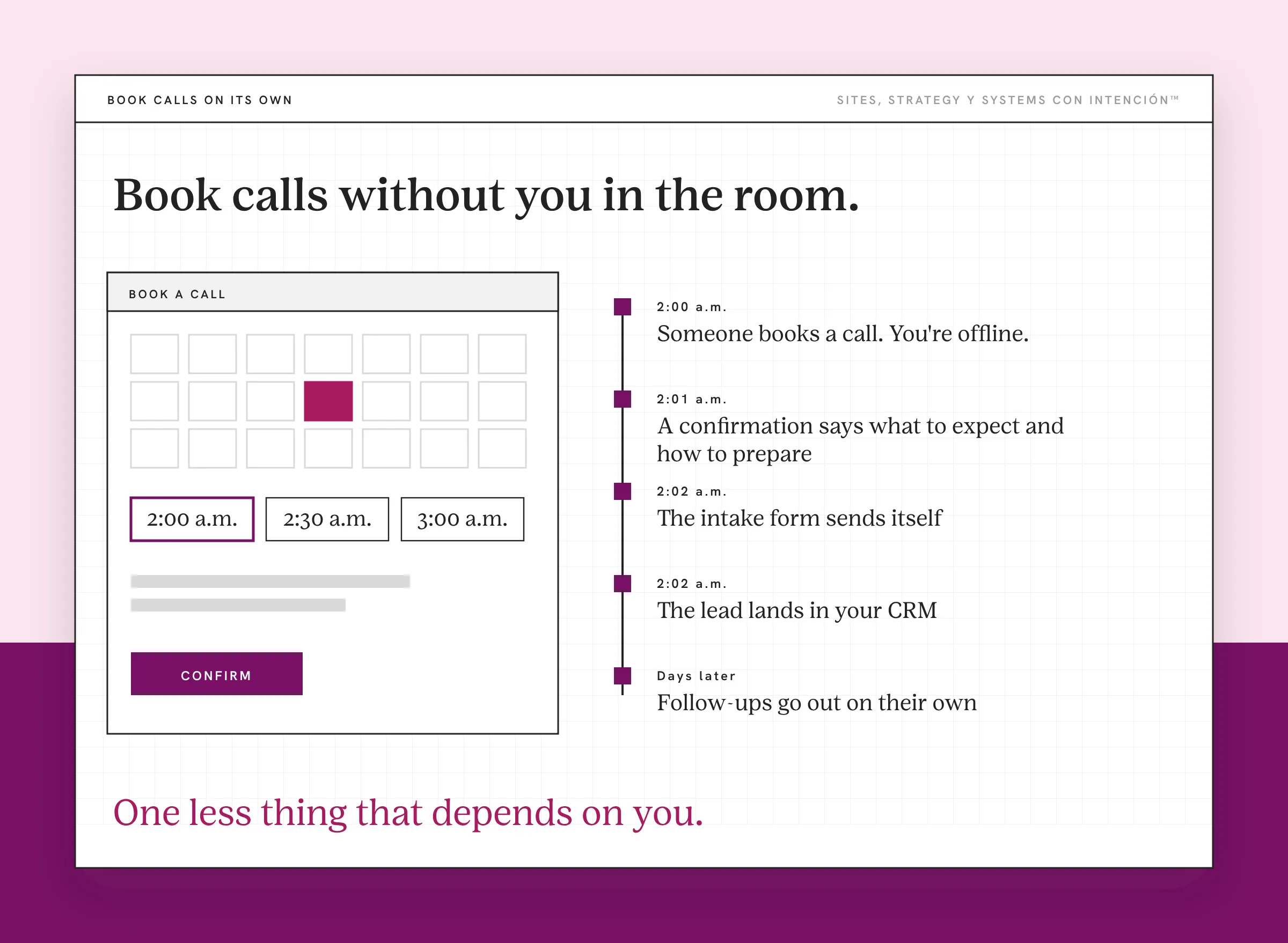
Your website can do all of that. It can explain what you do, who it's for and what happens next, which is the core purpose of a website. It can book a call at 2 a.m. and send a confirmation before you wake up. It can follow up with someone three days after they downloaded your guide. None of that needs you in the room.
Plenty of service sites don't do any of it. They describe the business and then wait for you to take over, so the site doesn't generate leads on its own. That's a brochure with your face on it. For the bigger picture on treating the site as something that works for you, see treat your website like a business asset.
What Happens When Your Site Can't Sell Without You?
You become the salesperson 24/7. Every inquiry depends on you replying, explaining your process again and sending your calendar link by hand. Your DMs turn into a sales desk.
Leads go cold while you're away. A vacation, a sick day or a busy client week means inquiries sit unanswered. Speed matters here. Research published in Harvard Business Review on how fast companies respond to online leads found that most companies aren't responding nearly fast enough. Diache, every hour someone waits, they're also looking at whoever answered first.
You burn out and growth hits a ceiling. I've said this before and I'll keep saying it: when the work routes back to you, burnout and the growth ceiling are the same mechanism with different symptoms. The person is absorbing what the system should absorb. Burnout is what that does to you. The ceiling is what it does to your revenue. Ay, mija, you can't grow past the number of hours you can personally answer messages. When every path still ends with you, more marketing, more tools or more people won't change that. If you're still the connective tissue, the business hasn't gained capacity.
What Should Your Website Do While You're Off the Clock?

Answer the Questions You Repeat
Write down the questions you answer every week. How much does it cost? How long does it take? Do you work with businesses like mine? What happens on the call? Put those answers on your site, in plain words, where people will find them. Your services page and an FAQ section are the obvious places. FAQs still deliver value when they answer the questions people actually ask.
Qualify People Before They Book
Say who your offer is for and who it isn't for. It feels risky. Créeme, it saves you calls with people who were never going to hire you. A short intake form with two or three real questions does the rest without adding conversion friction.
Book Calls on Its Own
Connect a scheduling tool so people can book without emailing you first. Send an automatic confirmation that says what to expect and how to prepare, since that email is part of the post-click experience. Eso sí, test it on your phone. A booking tool that breaks on mobile sells nothing.
Follow Up Automatically
Someone who signs up for your list or downloads a guide should get a few helpful emails without you remembering to send them. Tools like Zapier connect your forms, email and CRM so the follow-up happens automatically.
Sell Your Smaller Offers
Not everything needs a call. A lower-priced offer, a paid assessment or a product can be bought straight from your site with a checkout page, one more way to turn site visitors into leads. That's the clearest version of a website selling while you're away: you wake up to a sale.
What Does It Look Like When It Works?
My own business runs on this. Someone books a call without the email back-and-forth. The intake form sends itself after they book, the lead lands in my CRM and the follow-ups go out on their own. I've built the same kind of flow for clients and it gives them time back, because nobody's copying lead details by hand or trying to remember to send the next email.

I was part of the team on a multilingual lead generation site built to guide people through a complex decision. It had a quiz with branching logic and personalized results, then integrated follow-up sequences that sent each person emails based on what they chose. In its first campaign window, it brought in more than 1,500 leads into segmented email workflows and returned 70 times its cost. That result belongs to the whole team and the whole system.
The point is that the site did the qualifying and the follow-up on its own. Nobody had to answer each lead by hand to keep them moving. Pues, that's the job of a good salesperson.
If you want the full path from first visit to inquiry, how a website conversion funnel works maps it out. That path is the backbone of website strategy for a service business.
Where Do You Start?
- List the five questions you answer most. Add the answers to your site this week.
- Add a "who this isn't for" line to your main offer page.
- Connect a booking tool with an automatic confirmation email.
- Set up one follow-up email for people who join your list or inquire.
Start with one that's small enough to fix now and takes real time off your plate. Each piece you hand to your site is one less thing that depends on you.
Key Takeaways
- Your website is your best salesperson when it sells without you in the room.
- When it can't, you become the salesperson for every lead, leads go cold when you're away and burnout and the growth ceiling show up together.
- Answer repeated questions, qualify people, book calls, follow up and sell smaller offers on your site.
- Start with the task that eats the most of your time and hand that to the site first.
My site can't sell without me. Where do I start?
Take La Digital Rueda first. It's free and takes about two minutes. It asks a few questions about your site, your content and your backend and shows you where the pressure is.
Want more like this in your inbox? Off the Clock is my week-ish newsletter about websites, systems and burnout-free business.
Frequently Asked Questions
Can my website sell for me?
Yes, if it's set up to. A site can explain your offer, answer common questions, qualify people, book calls, follow up by email and sell smaller offers through a checkout. Most service sites only describe the business, so the owner still does the selling. Adding those pieces gradually moves the work to the site.
How do I make my website work while I'm away?
Put the answers to your most common questions on your site, add a booking tool with automatic confirmations and set up follow-up emails for new sign-ups and inquiries. Then test the whole path on your phone. When those pieces work, an inquiry can move forward without waiting for you to reply.
What should my website automate first?
Start with a task that's small enough to fix this month and takes real time off your plate. For many service providers, that's scheduling calls or answering the same pre-sale questions. A booking tool and a clear FAQ section can save you hours a week on their own. Follow-up emails are a good second step.
Do I need expensive software to automate my website?
Not always. A scheduling tool, an email platform and a connector like Zapier cover most of what a service business needs. Many of these have free or low-cost plans. The bigger investment is deciding what you want automated and writing the messages it sends.
Will automation make my business feel less personal?
Not if you write it in your own voice. Automation handles timing and delivery so people get a reply quickly. The messages can still sound like you. It also frees up your time for the conversations that need you, like the call itself.
About the Author