
Nobody at the family table cares whether the pastelón came out of the oven looking like a magazine cover. The real review happens a few minutes later, when everyone goes back for seconds and somebody asks you to save them a plate. That's how you know it worked.
Your website gets judged the wrong way all the time. People look at how it looks, how much traffic it gets or how it compares to a competitor's. That's like judging the pastelón by the photo. If you want to know what website success actually looks like, look at what the site does for your business. In 12+ years and 100+ sites worked on, I've learned that answer changes from one business to the next.
The Short Answer
Website success depends on your goals. For a service business, it looks like inquiries from the right people, sometimes fewer of them and a better fit, plus a site that handles questions and booking without you. A beautiful design or a big traffic number doesn't count as success on its own. Decide what the site is for, then measure that.
If You're Reading This Because It's Your Site
Reading more isn't the hard part. La Jugada is $47 and it tells you which layer this is actually sitting in.
Get it, $47Why Does Website Success Look Different for Every Business?
When people ask me what matters most on a site, my honest answer is that it depends on their goals. What is an issue for one is nothing for another.
A slow page can be a small thing for a consultant whose clients come from referrals and only visit the site to check that they're real. The same slow page is a big problem for a coach running ads to a booking page, because page speed affects whether visitors stay. Same site issue, opposite verdict.
So before you can say whether your site's working, you've got to decide what it's for. Ay, mija, that sounds obvious. It's also the step that gets skipped.
Does Success Mean More Inquiries?
Not always. Sometimes success looks like fewer inquiries.
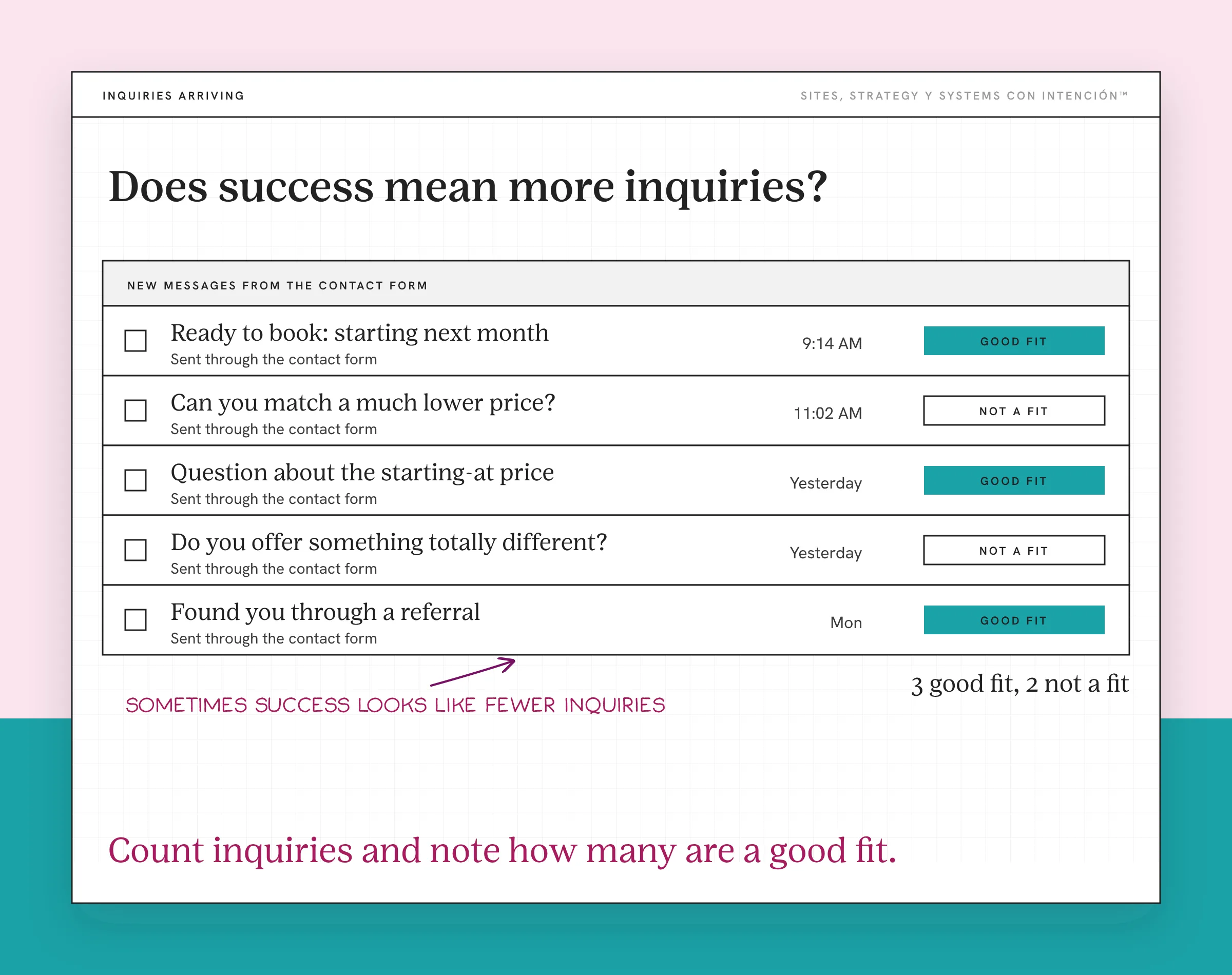
If your site brings in a steady stream of messages and a lot of them are the wrong fit, you're spending hours on calls that go nowhere. A site that brings in fewer people who are ready, who fit your offer and who can afford it is the better site. You'll feel it right away. Diache, your calendar will tell you the difference before your analytics do.
That's why clear copy that says who your offer is for and who it isn't for matters so much. It filters people before they ever reach you. Chasing a bigger number for its own sake is a trap. More traffic is not the goal explains why.
Does Success Mean the Site Runs Without You?
For a lot of service providers, yes. One of the clearest signs of a successful site is how much time it gives you back.
A site that answers the questions you're tired of repeating, lets people book on their own and follows up automatically is ready to scale because it's doing work you'd otherwise do by hand. Pues, every hour you get back is an hour for clients, for rest or for the next thing you want to build. Bendito, that's a kind of success no dashboard shows you. How to set that up is covered in your website is your best salesperson.

How Do You Know If Your Site Is Successful?
Write down what success means for your business in one or two sentences. Don't overthink it. Then pick the numbers that show it, so you're not running your business without the numbers.
- The right inquiries. Count inquiries and note how many are a good fit. If you use GA4, set your form and booking as key events so they're counted for you. A good-fit count that's steady or growing is a strong sign.
- Where they come from. Know which traffic channels bring the people who become clients.
- Time back. Notice how many questions and booking tasks the site handles without you.
- The trend over months. Compare each month with the one before and the same month last year.
If you need help deciding what to count, the website metrics that matter walks through the core ones. To check whether your site is turning visitors into inquiries at all, see how to tell if your website is converting.
Check these on a schedule so you can read your analytics without feeling overwhelmed. Ojo, success you only look at once a year is a guess with a nice story attached. A regular check-in keeps your website strategy tied to what's actually happening.

What to Do This Week
- Write your definition. One or two sentences on what your site is for.
- Count last month's good-fit inquiries. Not every message, only the ones that could become clients.
- List three questions your site still makes you answer by hand. Fix one.
- Put a monthly check on your calendar. Same numbers each time.
Once you know what success looks like for you, it gets a lot easier to review your own site objectively. That's why the definition comes first.
Key Takeaways
- Website success depends on your goals, because what's an issue for one business is nothing for another.
- Success can look like fewer inquiries that fit better.
- A site that answers questions, books calls and follows up without you is giving you time back.
- Define success in a sentence or two, then measure the numbers that show it every month.
I'd rather talk through what success should mean for my site.
Bring your site, your numbers and whatever's bugging you. We'll spend one private session on your real question and you'll leave with notes. It's from $350. Full audits are available and get quoted first.
Frequently Asked Questions
How do I measure website success?
Start by deciding what the site is for, like inquiries, bookings or email sign-ups. Then count those results each month, note how many are a good fit and see which channels bring them. Track how much routine work the site handles without you. Compare each month with the previous one and the same month last year.
What does a successful website look like?
A successful website brings in the right people and makes it easy for them to take the next step. It explains your offer clearly, answers common questions and lets people book or buy without waiting on you. That's what you're paying it for. How it looks matters less than whether it does those jobs for your business.
Is more traffic a sign of website success?
Not by itself. More traffic only helps if the right people are arriving and taking action. A site with less traffic and more good-fit inquiries is more successful than one with lots of visitors who never reach out. Watch inquiries and fit alongside traffic before calling it a win.
Can fewer inquiries mean my website is working better?
Yes, if the inquiries you get are a better fit. Clear copy that says who your offer is for and who it isn't for can reduce the number of messages while raising the share that turn into clients. Count good-fit inquiries separately so you can see that change.
How often should I check whether my website is successful?
A monthly check works for most service businesses. Look at the same numbers each time, like good-fit inquiries, where they came from and how much the site handles without you. Review the bigger picture every few months or whenever your offers or goals change.
About the Author