

Anyone who plays fantasy baseball knows there are a hundred stats you could check every week, before you even get to how the Mets did. Nobody reads all of them. The people who win check the few that decide the matchup and make their moves from there.
Running a business without looking at the numbers is like setting your lineup on vibes. You might get lucky for a while. In 12+ years and 100+ sites worked on, I've learned you don't need every report to run a business on purpose. You need a few numbers you check on a schedule. Then you act on what they tell you.
The Short Answer
When you run a business without looking at the numbers, you're guessing where your clients come from and where your time and money should go. Start with three: how many inquiries came in, where they came from and how many became paying clients. Check them monthly and change one thing based on what they show you.
If You're Reading This Because It's Your Site
Reading more isn't the hard part. La Jugada is $47 and it tells you which layer this is actually sitting in.
Get it, $47What Happens When You Don't Look at the Numbers?
You make decisions on feel. You keep posting on the platform whose vanity metrics make it feel busy, keep paying for the tool you signed up for last year and keep blaming the website or the algorithm when a month is slow instead of opening the analytics that stress you out. Some of those calls are right and you can't tell which ones.
The bigger cost is that you can't see patterns. A slow quarter looks like bad luck when a channel stopped working months ago. A great month looks like magic when it's something you could repeat. Ay, mija, you end up working harder without knowing what's working.
None of this needs a finance degree or a fancy dashboard. It needs three numbers and a date on your calendar to read your analytics without getting overwhelmed.
Which Three Numbers Should You Start With?
The right numbers depend on what you're trying to do. When people ask me what website success actually looks like, my answer is that it depends on their goals, because what is an issue for one business is nothing for another. For most service businesses, though, these three cover the core.
How Many Inquiries Came In?
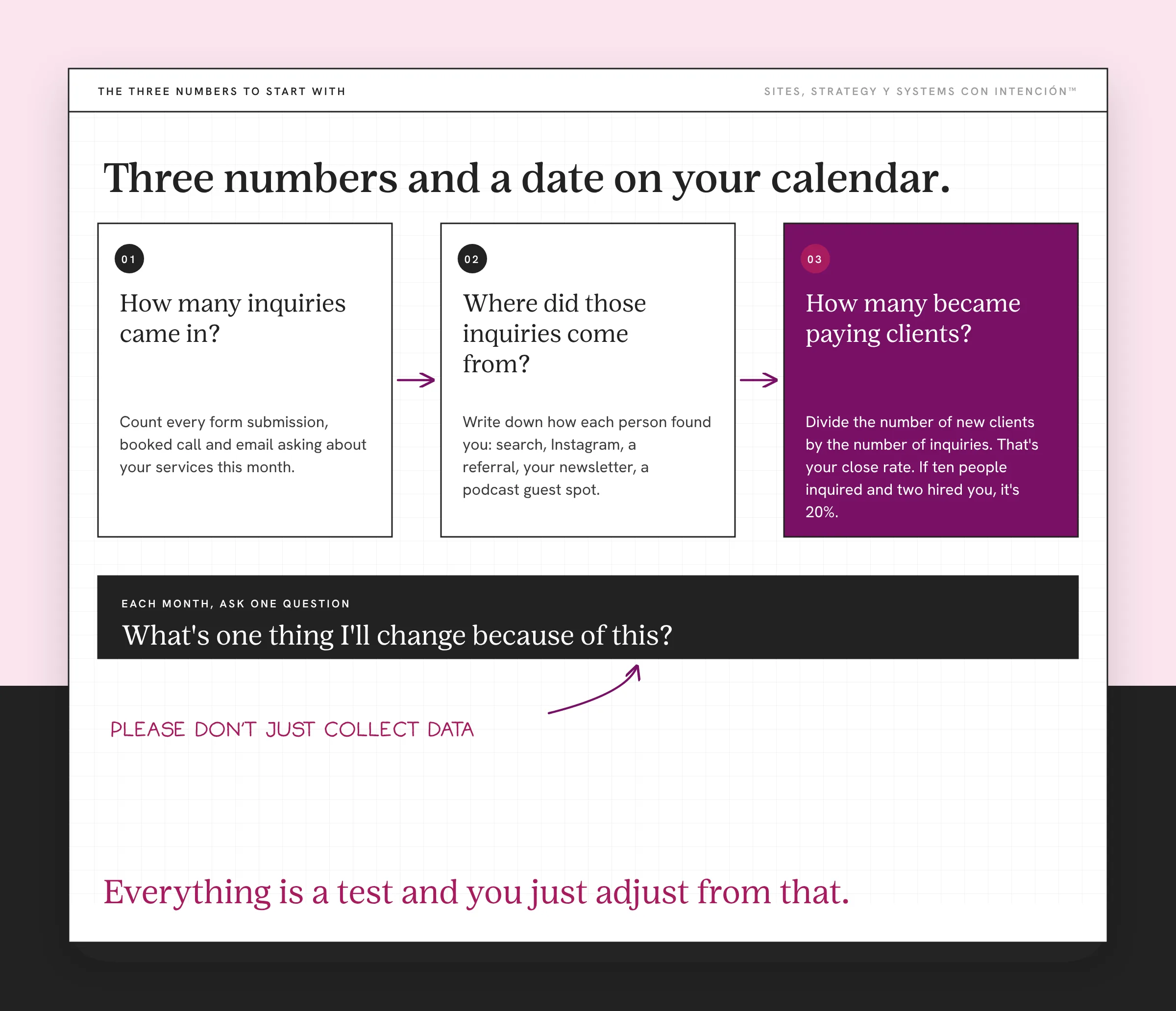
Count every form submission, booked call and email asking about your services this month. This is the top of everything and the clearest way to tell if your website is actually converting. If inquiries are flat or dropping, nothing further down can grow.
Your site should be tracking these automatically, marked as key events in Google Analytics. If it isn't, what to track in GA4 for a service business walks through the setup.
Where Did Those Inquiries Come From?
Write down how each person found you: search, Instagram, a referral, your newsletter, a podcast guest spot. Ask on your intake form if you have to. Once your forms send lead data to GA4, its lead acquisition report shows which channels bring those leads in. Eso sí, be specific. "Social" is too vague to act on.
This is the number that tells you where to spend your time. You might find that the platform you post on daily sends almost no inquiries while one referral partner sends several a month.
How Many Became Paying Clients?
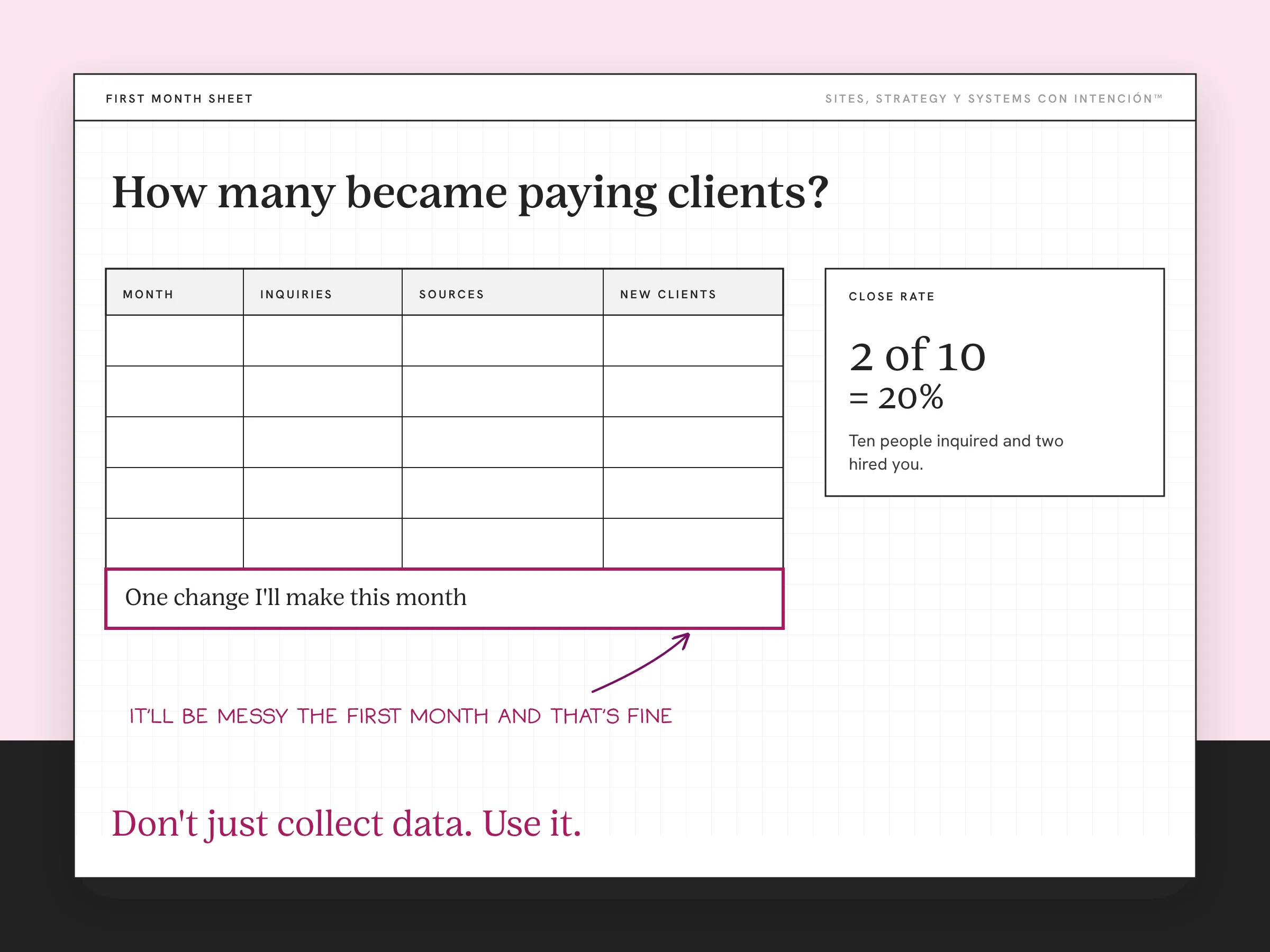
Divide the number of new clients by the number of inquiries. That's your close rate. If ten people inquired and two hired you, it's 20%. Then look at it by source: which channel brings people who actually buy?
This number gets skipped a lot and it changes everything. A channel that sends lots of inquiries and almost no clients is costing you time on calls. A channel that sends a few inquiries that close often deserves more of your attention.
What Should You Do With the Numbers?
Please don't just collect data. Use it. A spreadsheet you fill in every month and never act on is a diary.
Each month, look at the three numbers and ask one question: what's one thing I'll change because of this? Maybe you spend more time on the source that closes best. Maybe you fix the page that's getting traffic and no inquiries. Maybe you stop paying for something that isn't bringing anyone in. Diache, even one small change a month adds up over a year. Everything is a test and you just adjust from that. The three numbers are how you know which way to adjust.

If inquiries are coming in from the site and very few turn into clients, the problem might be the fit of the people your site attracts. That's its own post: your website traffic is up but revenue is not. For the site-specific numbers underneath these three, see the website metrics that matter. Those three numbers are where I'd start any website strategy conversation.
How Do You Start If You've Never Tracked Anything?
- Open a simple spreadsheet with four columns: month, inquiries, sources and new clients.
- Fill in last month as best you can from your inbox, calendar and payment records.
- Add a "How did you hear about me?" question to your intake form.
- Put a monthly date on your calendar to update it.
- Write one change you'll make each month based on what you see.
It'll be messy the first month and that's fine, pues. Give it a few months and you'll start seeing patterns. That's when it starts to feel like you're running the business on purpose. Treating your numbers this way is part of making your website a business asset.
Key Takeaways
- Running a business without looking at the numbers means making decisions on feel and missing patterns.
- Start with three numbers: inquiries, where they came from and how many became clients.
- Close rate by source tells you which channels bring people who buy.
- Check monthly and make one change based on what you see.
I've got the numbers. Can I talk them through with someone?
Bring your site, your numbers and whatever's bugging you. In one private session we'll work through your real question and you'll leave with notes. It starts at $350.
Frequently Asked Questions
What numbers should a small business track?
Start with three: how many inquiries you got, where they came from and how many turned into paying clients. Those show whether your marketing is working and which channels bring real business. Once those are a habit, you can add revenue by source or site metrics like where visitors drop off.
What happens if I don't track my business numbers?
You make decisions on feel. You might keep spending time on channels that don't bring clients and miss the ones that do. Slow months look like bad luck and good months look impossible to repeat. Tracking a few numbers turns those guesses into patterns you can act on.
How do I calculate my close rate?
Divide the number of new paying clients by the number of inquiries in the same period. If 10 people inquired and 2 hired you, your close rate is 20%. Calculate it by source too, so you can see which channels bring people who are most likely to buy.
How often should I look at my business numbers?
Monthly works for most service businesses. Pick a date, update the same few numbers and compare them with the month before. Look at trends over several months before making big changes, since one slow month on its own doesn't tell you much.
Do I need special software to track my numbers?
No. A simple spreadsheet works to start. Your inbox, calendar, payment records and website analytics already hold most of the information. As you grow, a CRM can track inquiries and sources automatically, but the habit of checking matters more than the tool.
About the Author