
You've sat in the Ticketmaster queue for concert tickets. The little number says thousands of people are ahead of you, then it drops, then somehow it goes back up. You refresh and stare and your stomach drops every time it moves the wrong way. You can't do anything to change it. You just watch.
That's what checking your analytics feels like for a lot of business owners. It's also the answer to why checking your analytics stresses you out. In 12+ years and 100+ sites worked on, I've learned that the stress comes from how you're looking at the numbers more than from the numbers themselves.
The Short Answer
Checking your analytics stresses you out for three reasons. You open the dashboard without a question, so every number feels like a verdict. You check too often, so normal daily swings look like failure. The site feels like you, so the data feels like a grade. Fix it with a question, a schedule and a little distance.
If You're Reading This Because It's Your Site
Reading more isn't the hard part. La Jugada is $47 and it tells you which layer this is actually sitting in.
Get it, $47Why Does Every Number Feel Like a Verdict?
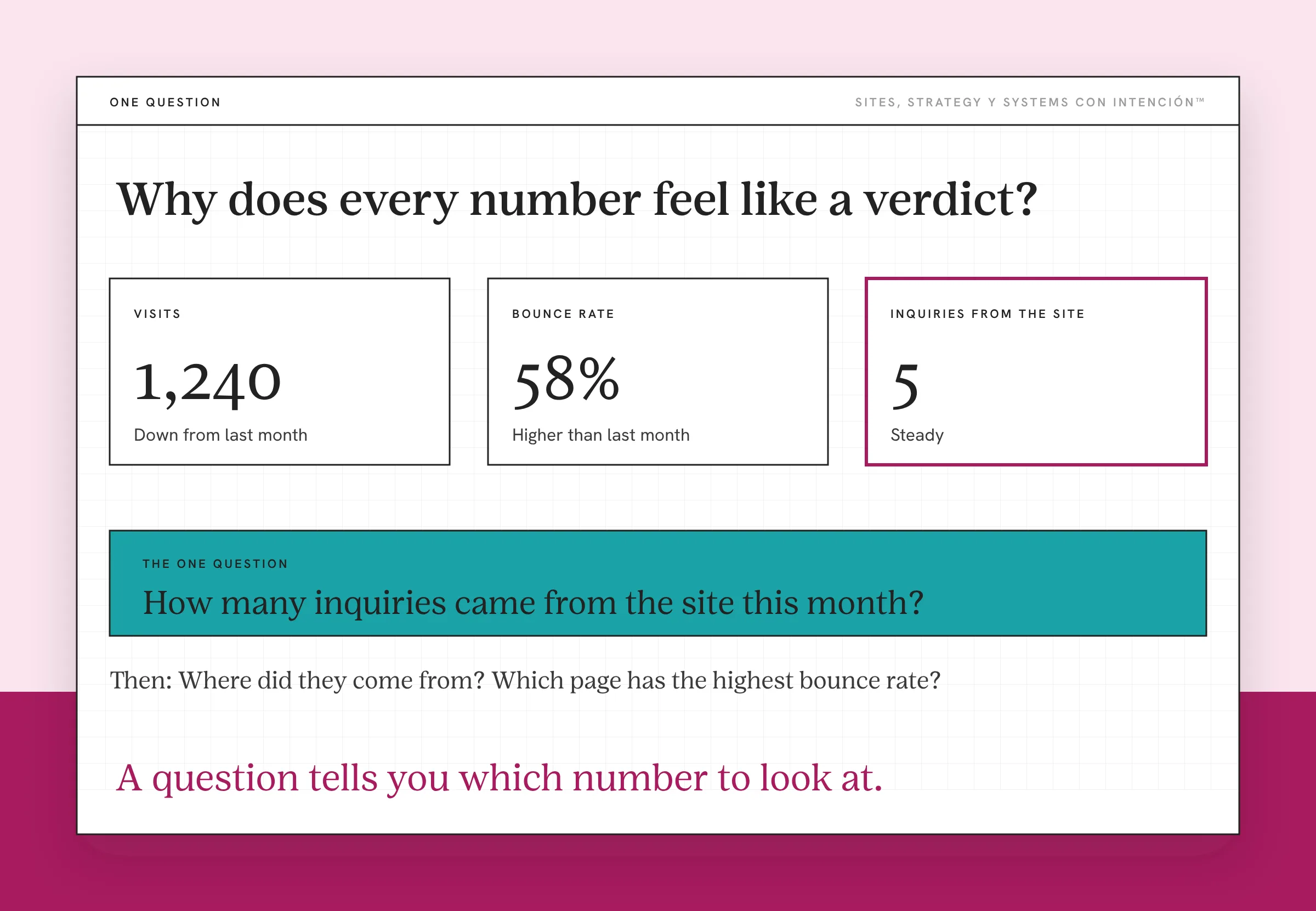
When you open your analytics without knowing what you're looking for, every chart is a surprise. Traffic down feels bad and a higher bounce rate feels worse. You don't know which numbers matter, so all of them feel like they're judging you.
That's the first source of the stress. A dashboard full of charts with no question behind it is just noise. Noise is stressful.
What to do about it: go in with one question. How many inquiries came from the site this month? Where did they come from? Which page has the highest bounce rate? A question tells you which number to look at and lets you ignore the rest. What you look for also depends on what success looks like for your business. Like I always say, it depends on their goals, because what is an issue for one is nothing for another. Ay, mija, a dip in blog traffic means nothing if your inquiries are steady. Start with the website metrics that matter and you'll know which questions to ask.
Why Do Daily Ups and Downs Feel Like Failure?
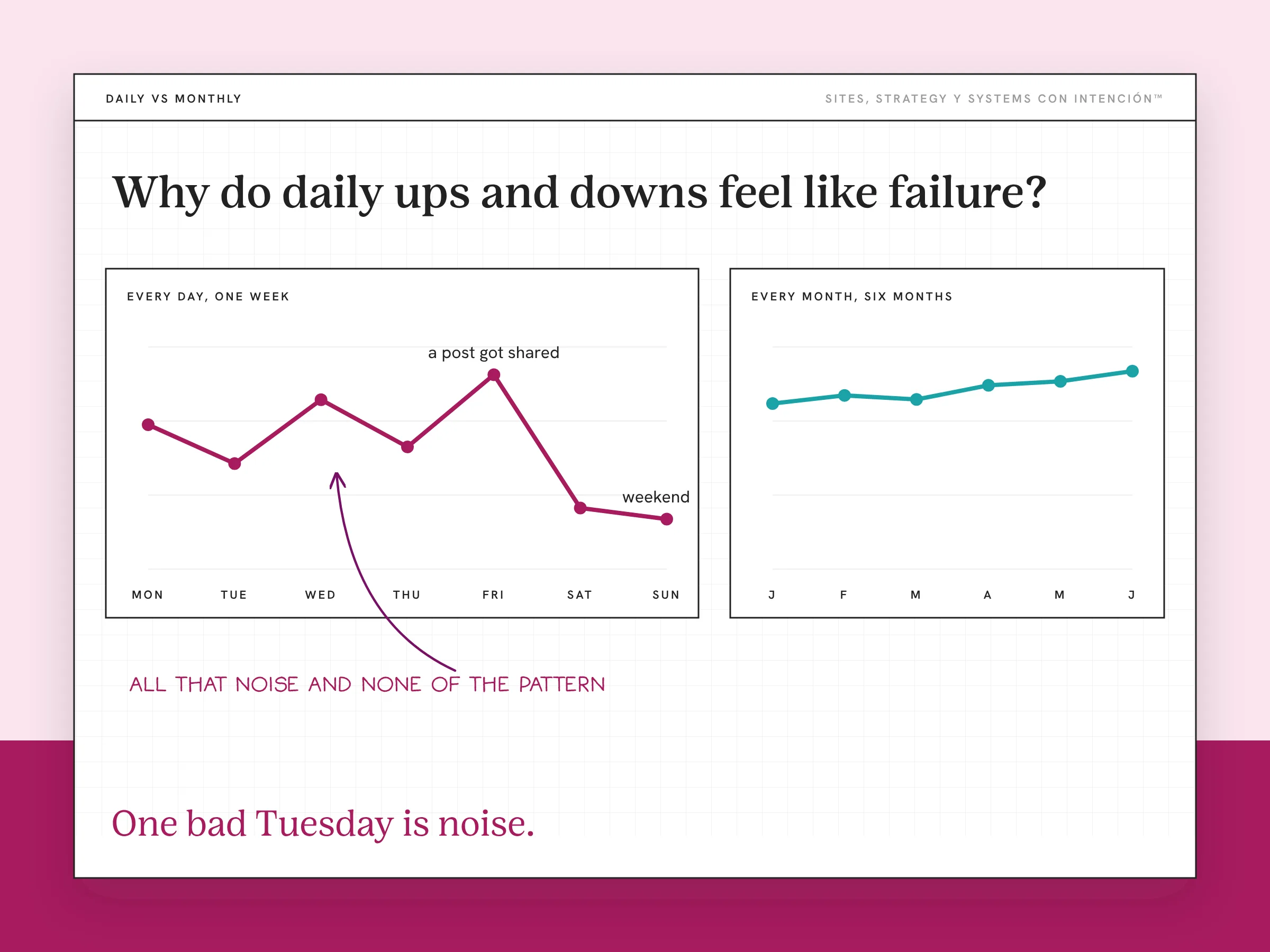
Website numbers move every day for reasons that have nothing to do with you. A holiday, a slow news week, a post that got shared, a weekend. If you check daily, you see all of that noise and none of the pattern.
That's the Ticketmaster queue problem. The number moves constantly and watching it move doesn't change anything except how anxious you feel. Diache, refreshing doesn't make it go faster.
What to do about it: check on a schedule. Monthly works for most service businesses. Compare each month with the one before and with the same month last year. One bad Tuesday is noise. Three months of fewer inquiries is a pattern worth looking into, starting with whether your site is actually converting. The step-by-step version of that routine is in how to read website analytics without feeling overwhelmed.
A client with a seasonal business once flagged a drop that turned out to be their slow season. It was the calendar doing what it does every year. Google's own Search Console help notes that much web traffic has seasonal and even weekly spikes and dips. Seasonality is one of the first things I rule out in website strategy.
Why Do the Numbers Feel So Personal?
Your site is your business and for a lot of service providers your business is you. Your photo is on the homepage. Your voice is in the copy. So when the numbers dip, it feels like a verdict on you.
That reaction makes sense. It also makes it harder to use the data, because every number gets filtered through how you feel about yourself that day.
What to do about it: treat the numbers as information about the site, the way a mechanic treats a reading from your car. A low number on your services page tells you something about how visitors behave on that page. It doesn't tell you anything about whether you're good at what you do. Eso sí, it's easier said than done, so give yourself a few months of checking on a schedule before you expect it to feel neutral.
What Happens When You Stop Looking Altogether?
Some owners deal with the stress by not checking at all. That feels better for a while. Then something breaks. Maybe the contact form stopped sending and nobody notices for months, which is how a small website problem gets expensive.

Avoiding the numbers means you find out late. If that sounds familiar, running a business without looking at the numbers covers where to start with just three.
The goal is a middle ground: you look on purpose, on a schedule, with a question in hand. And please don't just collect the data. Use it. Pues, a number that changes one decision is worth more than a dashboard you check every day.
What to Do This Week
- Write down one question you want your analytics to answer this month.
- Pick one day a month to check and put it on your calendar.
- Turn off any daily analytics notifications on your phone.
- Compare this month with last month and the same month last year. Write down one thing you'll change because of it.
Analytics get a lot quieter once you check them with a question, on a schedule and with a little distance. That's when the numbers start telling you what to fix next.
Key Takeaways
- Checking your analytics stresses you out when you look without a question, check too often or read the numbers as a grade on yourself.
- Go in with one question so you know which number matters.
- Check monthly and look for patterns. Daily swings are mostly noise.
- Treat the numbers as information about the site, separate from how good you are at your work.
Can I just go through my analytics with someone?
Bring your site, your numbers and whatever's bugging you about them. We'll work through your real question in one private session and the notes are included. Sessions start at $350. Full audits are available and get quoted first.
Frequently Asked Questions
Why does checking my analytics make me anxious?
There's probably no question behind the check. Without knowing what you're looking for, every number feels important and every dip feels like bad news. Checking too often and taking the numbers personally add to it. A clear question and a monthly schedule make the data much easier to read calmly.
How often should I check my website analytics?
Monthly is enough for most service businesses. Compare each month with the previous one and with the same month last year so you see real trends. Check more often during a launch, a paid campaign or a change to your offers or prices, when you need to react quickly to what's happening.
Why do my website numbers change so much?
Traffic and engagement move with holidays, weekdays vs weekends, news cycles and whether a post got shared. Those swings are normal and don't mean anything changed on your site. Look at trends over weeks and months to see what's actually happening with your business.
What should I look at first in my analytics?
Start with inquiries and bookings, then where those people came from and which pages they visited. Those numbers connect directly to clients. Most other reports are supporting detail you can check once you know what question you're trying to answer.
Is it okay to stop checking my analytics?
Taking a break from daily checking is healthy. Stopping completely is risky, because problems like a broken contact form can go unnoticed for months. A short monthly check on a few numbers gives you peace of mind without the constant pressure.
About the Author