
Back in January, Fast Company published the inside story of how Apple built the marketing strategy for Bad Bunny’s historic halftime show. And the detail that stopped me wasn’t the budget, the production scale or the creative direction. It was the brief.
Apple’s Vice President of Marketing, Tor Myhren, described the process simply: the first thing he does is ask the artist what they want. What do you want to get out of this? What do you want this to be?
Bad Bunny’s answer was: “This isn’t my halftime show. This is for everyone.”
Apple wrote that sentence on the wall and said, “That’s the brief. Let’s just make sure it feels like this is for everyone. This is a celebration.”
One sentence. And a trillion-dollar company built its entire marketing strategy, every visual decision, every campaign rollout, every piece of content, around that single clear intention.
The Short Answer
Apple's brief for Bad Bunny's halftime show was one sentence from him: "This is for everyone." Your website needs that kind of brief too. When the intention is clear enough to write on a wall, the messaging, offers, systems and conversion path line up behind it. Without it, you end up connecting the dots yourself.
If You're Reading This Because It's Your Site
Reading more isn't the hard part. La Jugada is $47 and it tells you which layer this is actually sitting in.
Get it, $47Your Website Needs a Brief Too – Here’s Why
I think about this constantly in the work I do with founders.
Everyone wants to start with the website. The design. The content strategy. The systems. And those things matter; they’re the infrastructure that holds everything together. But infrastructure built without a clear intention is just… organized confusion.
The first question I ask every founder is some version of what Apple asked Bad Bunny: What is this actually for?
Not what services do you offer. Not what’s your niche. The deeper question: when someone lands in your world, on your website, in your inbox, on your social, what do you want them to feel, understand and do?
The answer is almost never as clear as founders think it is. And that gap between “I kind of know” and “I can say it in one sentence” is usually where the real friction lives. That same friction shows up in businesses that feel stuck, even when nothing’s technically wrong – it’s usually not mindset, it’s structure.
Why Clarity Has to Come Before Your Website or Systems
Your business works the same way. When the intention is clear, the website almost builds itself. The messaging has a north star. The offers make sense in sequence. The systems know what they’re supposed to catch. The conversion path is obvious because every piece is oriented around the same thing. And the layout, your UX, reflects what matters most. Good site design isn’t just aesthetic, it’s strategic. User experience for service businesses goes deeper on that.
When the intention isn’t clear, you get the opposite: a website that reflects an older version of the brand, that explains everything but guides nothing. Offers that don’t connect. Systems that technically function but don’t feel cohesive – the exact problem most people try to fix by leaning harder on social media instead of strengthening the part that really needs intention: their website. And a founder who ends up being the bridge between all of it, manually explaining, qualifying and connecting dots that the infrastructure should be handling.

The Brief Isn’t a Tagline
I want to be specific about what I mean by “one sentence.” This isn’t your elevator pitch. It’s not your Instagram bio. It’s not a tagline for your homepage. It’s the intention underneath all of those things. The answer to: if everything you built worked exactly as designed, what would the experience be for the person moving through it?
For Bad Bunny, the answer was: this is for everyone. This is a celebration.
For your business, it might be: this is where overwhelmed founders find clarity without pressure. Or: this is where service providers stop performing and start building. Or: this is where your business finally catches what your content creates.
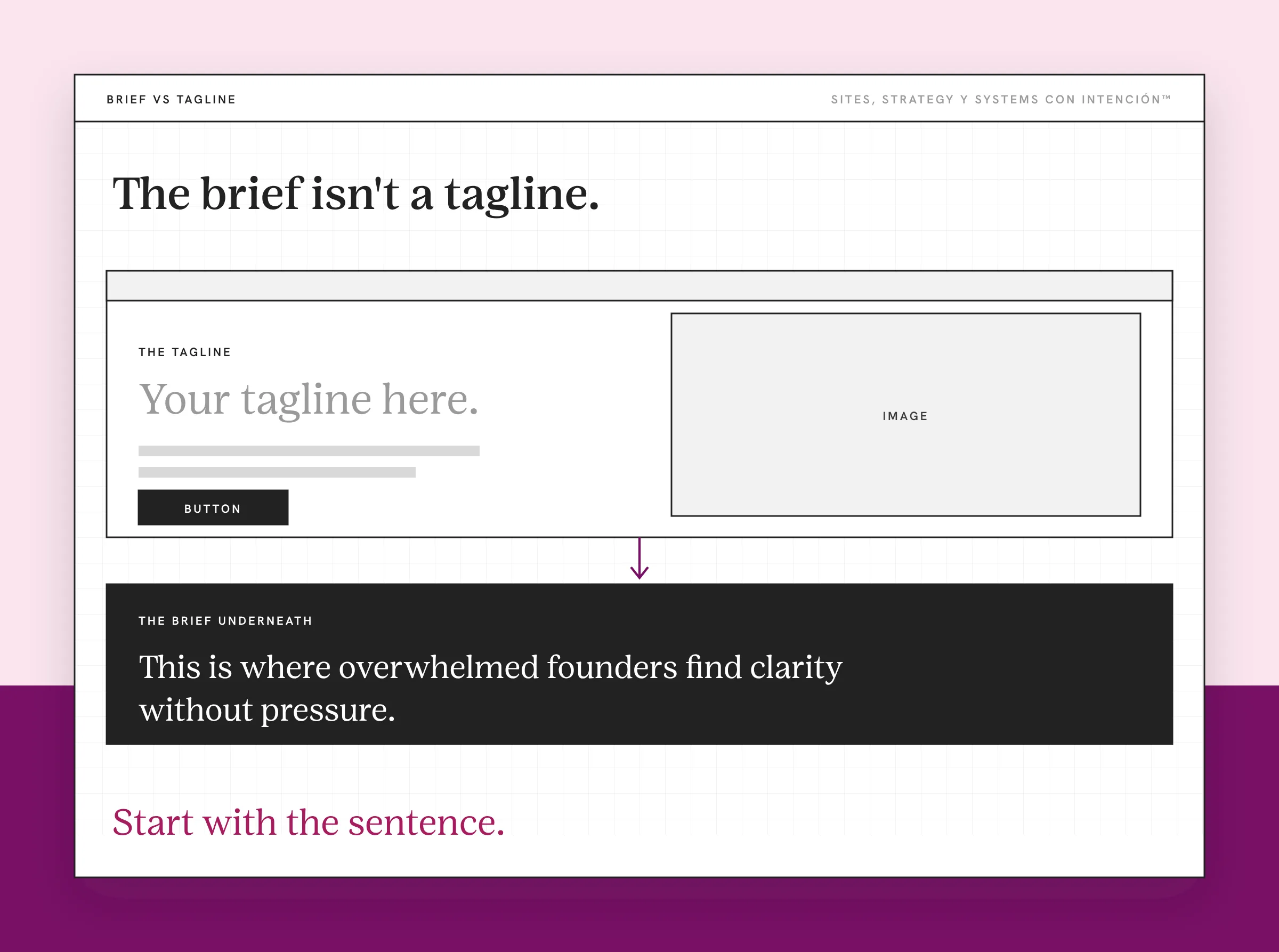
Whatever it is, it should be clear enough to write on a wall. Because if you can’t articulate it, your website definitely can’t either. That clarity is where all content strategy starts.
Start With the Sentence
The strongest websites I’ve built in over a decade of doing this work all started the same way: with one sentence the founder could say without hesitating. Not a mission statement. Not a brand book. Just the actual thing the whole ecosystem was meant to hold.

Bad Bunny knew what the show was for before a single stage piece was designed. Apple recognized it and built around it. The result was a halftime show that felt exactly like the intention: inclusive, celebratory, unmistakably his.
Your business deserves the same alignment. Start with the sentence. The infrastructure follows.
Key Takeaways
- Apple built every part of the halftime show's marketing around one sentence from Bad Bunny: "This is for everyone."
- Your website needs a brief too. When the intention is clear, the messaging, offers, systems and conversion path line up behind it.
- When the intention isn't clear, you become the bridge, explaining, qualifying and connecting dots the infrastructure should be handling.
- The brief sits underneath your tagline, your bio and your elevator pitch. It describes what the experience should be for the person moving through everything you built.
- If you can't say it in one sentence clear enough to write on a wall, your website can't say it either.
Okay, so does my site even say what it's for?
La Digital Rueda is free and takes about two minutes. It asks a few questions about your site, your content and your backend. Then it shows you where the pressure is.
Off the Clock is my newsletter for more of this, minus the big game budget.
Frequently Asked Questions
What does the Bad Bunny halftime show teach about marketing strategy?
It teaches you to know what something is for before you build it. Bad Bunny knew what the show was for before a single stage piece was designed and Apple built around that. The result felt exactly like the intention.
Why should I get clear before building my website?
When the intention is clear the messaging has a north star and the offers make sense in sequence and the systems know what they're supposed to catch. Without it you get a site that explains everything and guides nothing.
What is the one sentence brief?
It's the intention underneath your site and your content and your offers. Ask what the experience would be for the person moving through it if everything you built worked exactly as designed. If you can't write that on a wall your site can't say it either.
How do I know my intention isn't clear yet?
Your site reflects an older version of your brand. Your offers don't connect to each other. Your systems work but don't feel cohesive. And you end up being the bridge between all of it by explaining and qualifying and connecting dots by hand.
About the Author