You've reread your site so many times that the words stopped meaning anything. Everything is spelled right and every service is listed. It still doesn't sound like the business you actually run.
In 12+ years and 100+ sites worked on, the common website copy mistakes that cost the most are the ones where a page lists what the business does and never says what changes for the client. Typos matter too and I'll get to them. Ay bendito, a lot of the fixes are smaller than you think.
The Short Answer
The most common website copy mistakes are listing features without what changes for the client, hedging, jargon and copied language. On the page itself they show up as walls of text, hidden prices and process and a button that asks for too much. Fix the words that decide fit first, then the page, then give it a final read.
If You're Reading This Because It's Your Site
Reading more isn't the hard part. La Jugada is $47 and it tells you which layer this is actually sitting in.
Get it, $47Which Mistakes Are Hiding in the Words?
Most lists of copywriting mistakes start with grammar. These four come first because they decide whether the right person feels the page is for them. In my audits, when the site works and the right people still aren't inquiring, message clarity is one of the highest-leverage things I can change, so that's where I start.
Are You Listing Features and Skipping What Changes?
Think about flipping through a Delia's catalog. A few words next to the photo did the selling and told you how you'd feel in the outfit before they told you what it was made of. Your product or service needs the same job done.
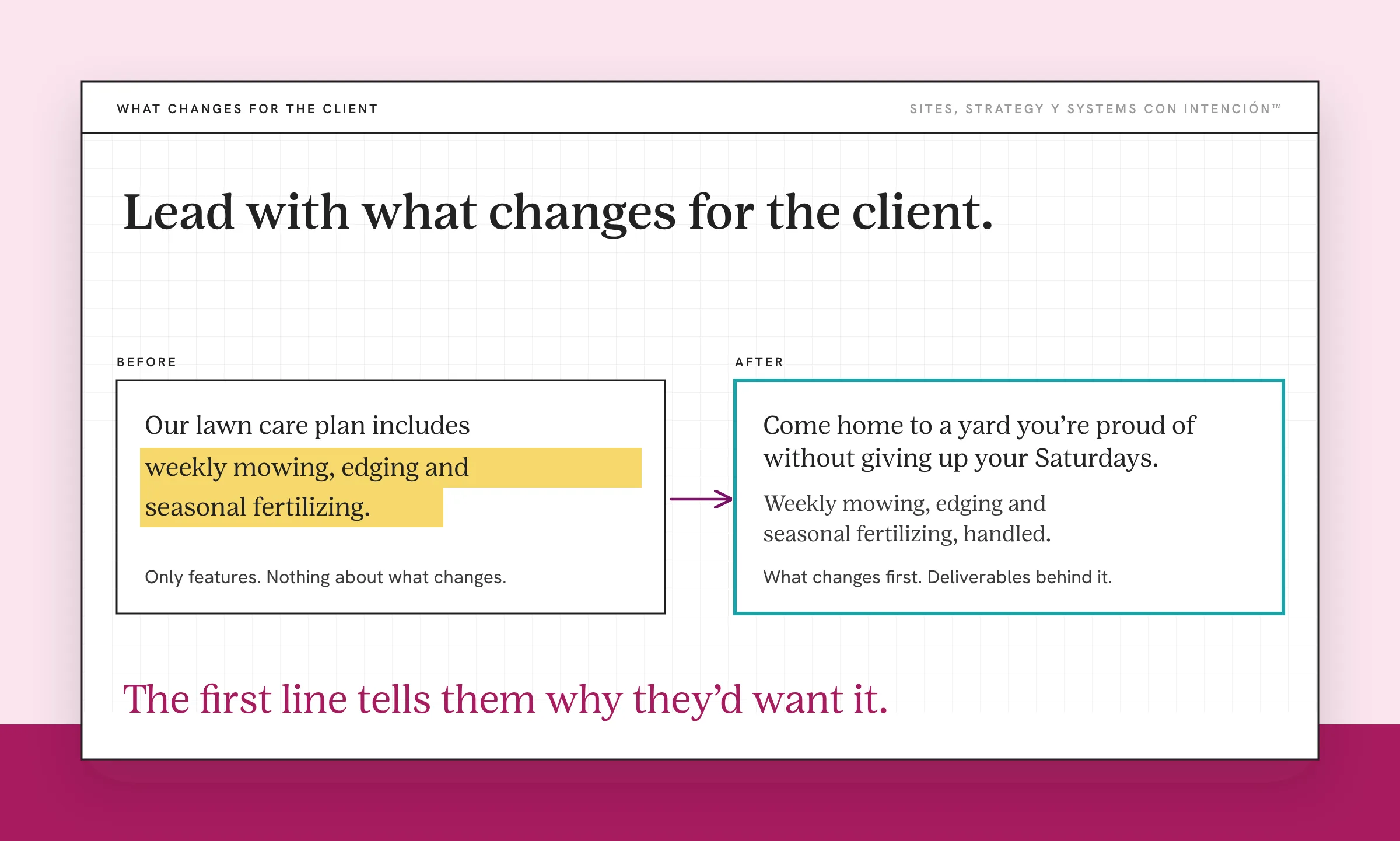
This is a fictional landscaping company. It's invented to show the writing and it isn't a client result.
Before:
Our lawn care plan includes weekly mowing, edging and seasonal fertilizing.
After:
Come home to a yard you're proud of without giving up your Saturdays. Weekly mowing, edging and seasonal fertilizing, handled.
The fix: lead with what changes for the client and keep the deliverables right behind it. Both belong on the page. The list tells them what they get and the first line tells them why they'd want it.
Are You Hedging and Inviting Too Softly?
"Feel free to reach out if you think we might be a good fit!" asks nobody to decide anything. Website copy that converts helps people decide.
Before:
Feel free to reach out if you'd like to learn more. We'd be happy to chat sometime.
After:
Book a 20-minute call. If we're not the right fit, I'll tell you.
The fix: cut the maybes and make one direct ask. Every time I've cut a page down to one decision point, that change did more than everything else on the list combined. On a single offer page I rewrote, cutting the hedging and the soft invitations and adding who it was for and who it wasn't came with better-fit inquiries and no extra volume.
Is Jargon Standing In for a Clear Message?
Words like "leverage" and "holistic" don't mean anything to the person who just needs their emails sent, diache.
Before:
We leverage holistic, scalable solutions to optimize your growth journey.
After:
We write your emails, schedule your posts and tell you each month what's working.
The fix: use the words your client uses. Pull them from sales calls, inquiries and reviews. If you wouldn't say a phrase to someone across the table, it's probably not clear copy.
Does Your Copy Sound Like Everyone Else's?
Try this test. Swap your logo for a competitor's. If nobody would notice, the copy is borrowed. Borrowed copy has no brand behind it.
The fix: write down how you'd explain what you do on a call, then ask what you do differently from the people next to you. It's also the question at the center of how to write an About page. That difference is your voice and it's the part a competitor can't copy. A good copywriter can sharpen it, but the raw material comes from you.
Which Mistakes Are Hiding in the Page?
Good words can still lose people when the page makes them hard to use.
Is the Page a Wall of Text?
Nielsen Norman Group's research on reading content on mobile found difficult text takes longer to read on a phone. Slower reading is where people start to skim and miss the point. Your page doesn't have to say everything, mija. Check your landing page or services page on your own phone before you decide it works.
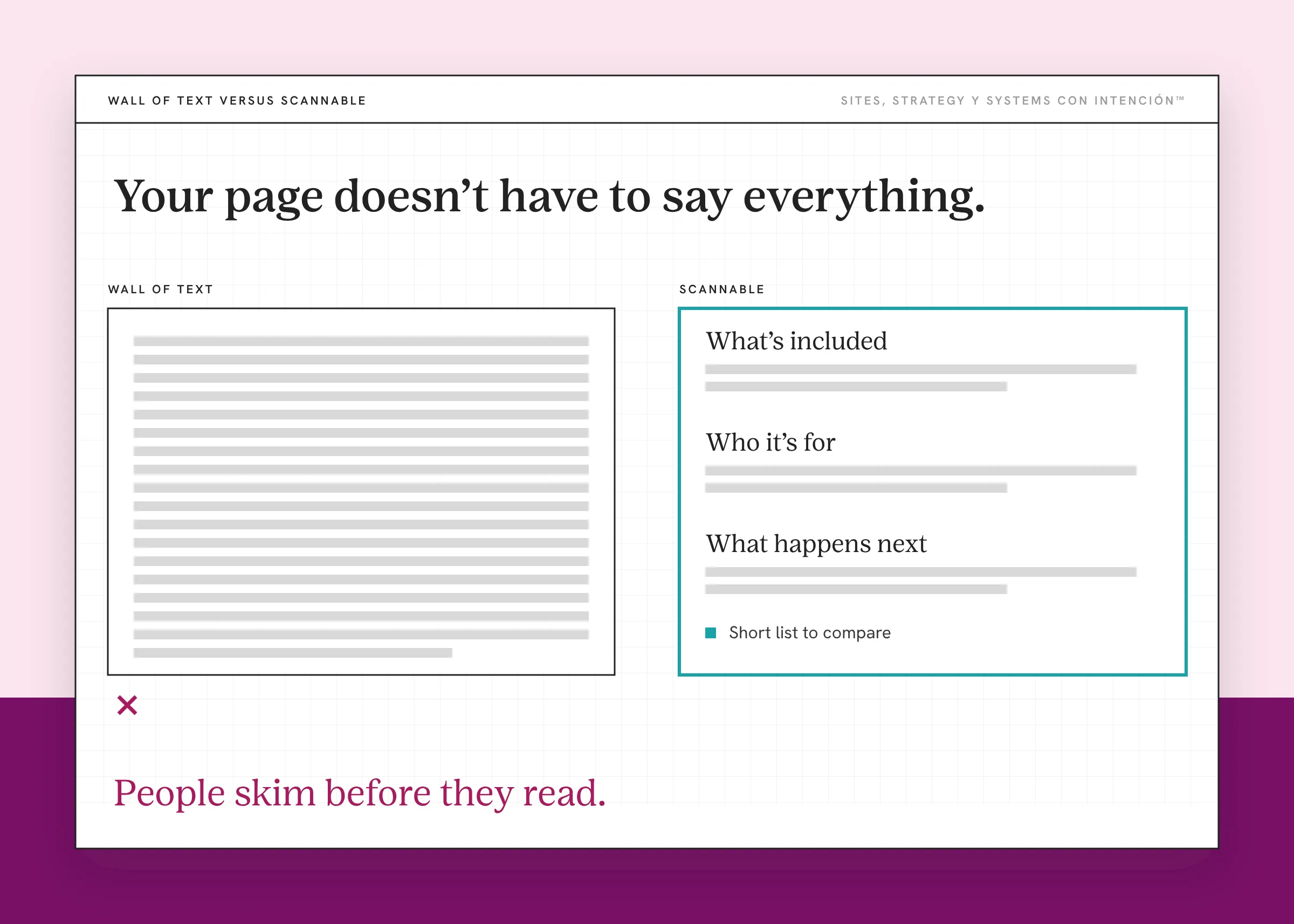
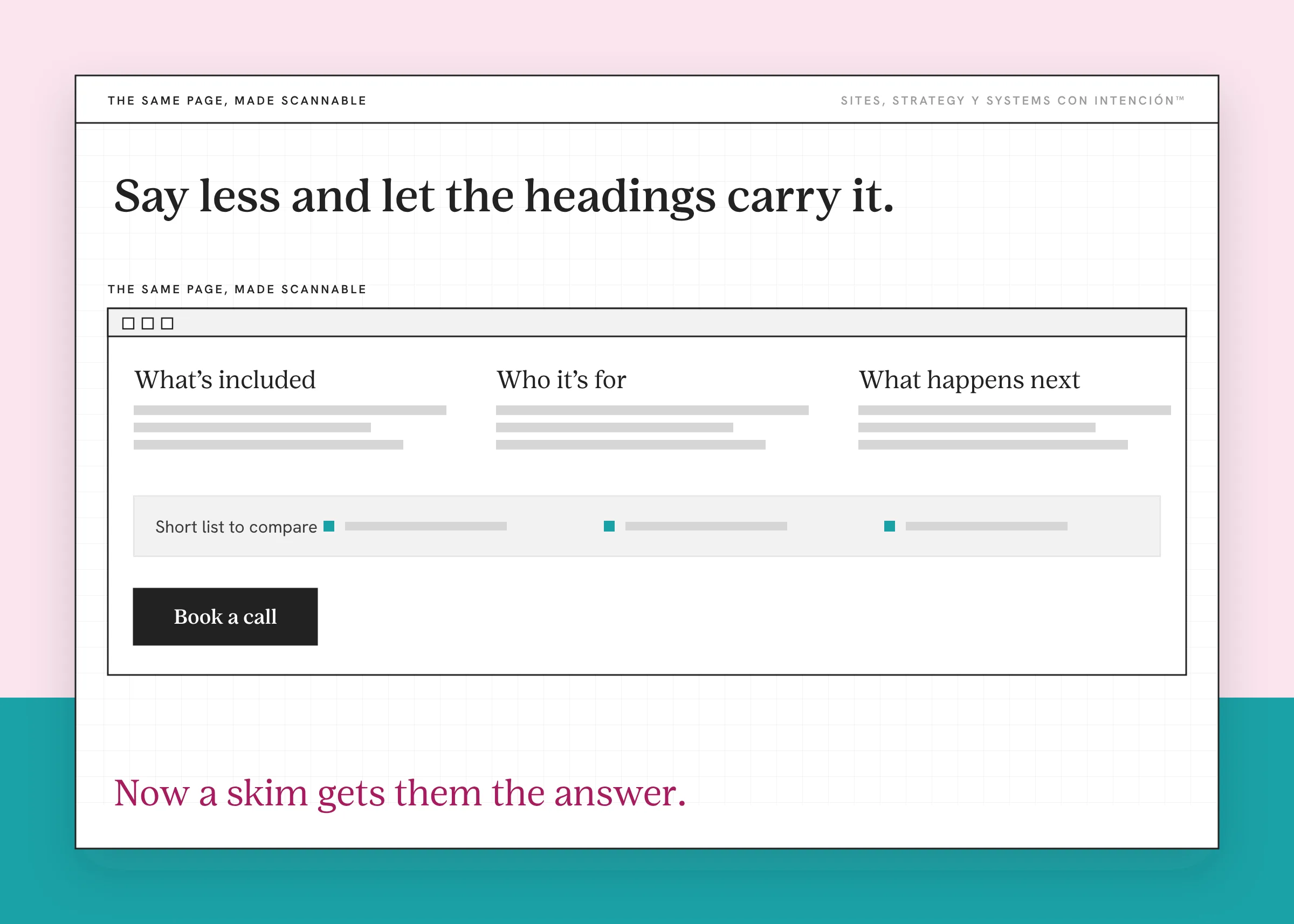
The fix: use subheadings that say what's underneath, short paragraphs and bullet points where someone needs to compare. Keep one idea in each paragraph.
Are the Price and Process Hidden?
Hiding prices isn't always the safe choice on a service business website. When someone has to ask for basic information, many of them won't.
The fix: give a starting price, a range or the factors behind your quote. Then add a short sequence for what happens after they reach out. I've had someone pause mid-call and say, "Wait, you already answered that on your site." That's what answering the basics up front does. How to write a services page covers how.
Does the Button Ask for Too Much?
A page can earn a free call and then send people to a twelve-field form. O sea, you asked for a lot before you gave them a reason.
The fix: match the ask to what the page has earned, the same way a sales funnel builds up to its ask. Look at what you're requesting, how long it takes and what happens afterward. Where the call to action goes on the page matters just as much as the wording.
Do Grammar and Typos Still Matter?
Yes. Stanford's web credibility guidelines say typos hurt a site's credibility more than people expect. They make a business look careless, even when the work itself is great. We've all hit send with a typo in it, bendito.
This one is also the easiest fix on the list. Read the page outloud, because your ear catches what your eyes skip. Check the punctuation, the tense and the names of your own services. Ask someone else to proofread it, since you've read your page too many times to see it.
Watch for passive voice too. "Your report will be sent by the 10th" works harder as "We'll send your report by the 10th." Active voice sounds like a person is on the other end.
Which Mistake Should You Fix First?
If nothing on the page is broken, start with the ones that decide whether someone feels the page is for them, in this order:
- What changes for the client. Rewrite the first lines so they say it.
- The ask. Cut the hedging and give one direct next step.
- The hidden basics. Add a price signal and a short process.
- The final check. Finish with a read outloud, then have someone else look.
If you're not sure the copy is even the problem, start with whether your site is losing you clients. When you're ready to rewrite, how to write website copy walks through it. Copy tends to be the piece of content strategy that moves the most for the least money.
Pick one page this week, find the copywriting mistake on this list that fits it and fix just that one. You don't need a full rewrite to see the difference.
Key Takeaways
- The costliest website copy mistakes keep the client from seeing what changes, who it's for and what to do next.
- Hedging, jargon and copied language make a page sound like everyone else's.
- Walls of text, hidden prices and a heavy button make good words harder to act on.
- Typos and passive sentences still matter. They're the quickest fix.
Okay, so which of these mistakes is on my site?
La Jugada is $47. Answer five questions and share your link. In about 10 minutes you'll get a read on your site, your marketing and your backend with the first move worth making on a private page. There's no call.
Want more like this in your inbox? Off the Clock is my week-ish newsletter about websites, systems and burnout-free business.
Frequently Asked Questions
What are the most common website copy mistakes?
The most common ones are listing features without saying what changes, hedging, using jargon and sounding like competitors. On the page, walls of text, hidden pricing and process and a button that asks for too much cost you people too. Typos and passive sentences add up. Fix the words that decide fit first, then the page, then give it a final read.
How do I fix bad website copy?
Start with the top of your main page and make sure it says what you offer, who it's for and what changes. Cut the hedging and give one direct ask. Replace jargon with the words your client uses. Then check the page on a phone and read it outloud. Fix one mistake at a time so you can see what helped.
Do typos and grammar mistakes hurt a business website?
They can make a business look careless, even when the service is strong. Grammatical errors and typos are also the easiest mistakes to fix, so there's little reason to leave them. Read your pages outloud and have someone else proofread them. Clear copy still matters more than perfect grammar if you have to prioritize.
Can fixing my copy improve SEO?
Clearer copy helps a search engine and a person understand what a page is about. Google's guidance on helpful content asks for content written for people. Use a keyword where it fits naturally and skip stuffing it. Fixing copy won't guarantee a ranking. It can improve how visitors respond once they arrive, which is where conversion rates come from, so I look at it alongside SEO.
Should I hire a copywriter or fix it myself?
Either can work. Start by finding the mistakes yourself, since you need to know what's wrong to brief anyone. A copywriter can sharpen your message and save you time. They still need your real words, your clients' questions and a clear goal for the page to write copy that works.
About the Author